It's an uphill fight to replace PVC in medical tubing

By Doug Smock
Published: January 11th, 2012

Teknor Apex, one of the world's largest compounders of flexible PVC, is actively developing a PVC-free alternative for medical applications and already reports a handful of commercial applications in smaller sizes.

Replacing PVC in medical applications is a daunting task because of the low cost of PVC compounds, the large infrastructure in place for manufacturing the material, and the regulatory review process required.

t
A highly flexible elastomeric option is availabe as a PVC replacement in medical tubing.

Some would say it's also hard to match PVC's performance record.

"PVC has been the material of choice for flexible medical tubing and respiratory masks for more than 30 years because of its balance of cost and functional properties," Elliott Pritikin, senior medical market manager at Teknor Apex Co. (Pawtucket, RI) told PlasticsToday.com in an interview.

To be sure, PVC remains strongly entrenched in medical applications.

But the drumbeat of negative publicity about PVC is ongoing and has led to increased efforts by some design engineers in the medical device community to explore alternatives. The Medical Device Directive in Europe requiring special labeling for all devices containing phthalate plasticizers coupled with a ban on children's products made using certain phthalates by the US Consumer Products Safety Commission has contributed to a bigger push in the medical design community.

Teknor Apex formally introduced Medalist MD-500 Series elastomers as a PVC replacement in medical tubing at MD&M West last year.

Pritikin says the Medalist compounds exhibit comparable crystal clarity and mechanical properties to PVC; provide similar clamp resilience and resistance to kinking and necking; have a similar "feel"; and are substantially more flexible and significantly less dense than PVC. At the same time they undergo minimal color shift upon heat aging after exposure to gamma irradiation, the most severe type of sterilization. A typical compound in the series, Medalist MD-575, actually exhibits 70% less heat-aged color shift than a gamma-stabilized PVC compound of comparable hardness, according to Teknor Apex.

Kuhne tests line speed

In a demonstration with American Kuhne, tubing made from the elastomeric compounds ran at speeds up to 830 ft/min while running Teknor's Medalist medical elastomer. At 600 ft/min line speed, tight tolerances of +/- 0.0004" on the OD and +/- 0.0001" on the wall thickness were held.

Pritikin says that the chemistries in the specific Medalist series are proprietary, but are drawn from the company's portfolio of polyolefin, styrenic, and vulcanizate materials.

The big job for Teknor Apex now is working with the entire supply chain to develop potential net cost savings for a total systems approach given the cost pressures in the medical market now and the significant cost discrepancy between PVC and TPE on a per pound basis. Elastomers can easily cost much more than 50% per pound that PVC. They have a 30 to 40% lower specific gravity, but that doesn't make up the difference in materials' cost. Plus there is the substantial cost to qualify the new materials. The improvement in flexibility can be a significant advantage in some applications.

In an important breakthrough, Teknor Apex has developed patent-pending adhesive systems to bond specific grades of its new Medalist medical series.

According to Teknor Apex testing, the new systems enable common-size TPE infusion tubing to achieve bonds exhibiting a retention force significantly greater than the minimum required by device manufacturers, with 99.7% confidence that failures will not occur below the threshold of 35.6 Newton force (8.0 lbf).

"Commercially available adhesive and solvent systems used with PVC tubing either do not enable most TPE tubing to achieve this bonding strength or do not permit sufficient work time for ease of assembly," says Pritikin. "Teknor Apex has overcome these limitations for TPE tubing in the 65 to 85 Shore A range with development of two patent-pending adhesive systems and one patent-pending solvent bonding system."

One of the systems uses commonly available solvents and may eliminate need for multilayer extrusion, a significant cost savings.

Teknor Apex feels that the breakthroughs in bonding technology remove remaining barriers to use of Medalist MD-500 Series elastomers in medical tubing.

Samples of tubing of the material will be part of the Teknor Apex exhibit in booth 58038 at NPE 2012 being held April 1-5 in Orlando, FL.

For the record, Pritikin says the concerns raised about PVC are "undue" and that Teknor Apex "has a great deal of confidence in the long-term sustainability of PVC. We wanted to offer the market an alternative where it's desired." The following table was provided by Teknor Apex:

7


Your rating: None Average: 5 (3 votes)

the first all-plastic chair

the first all-plastic chair was designed by the italian designer joe
colombo in 1965. it was made in 5 pieces - the backrest /seat
monococque and 4 single legs.A
Plastic Chair
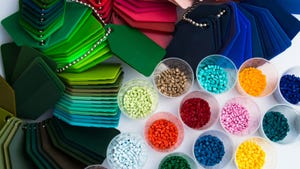
begins with an exact combination of thousands of tiny pellets of
an oil derivative, a blend of resin, mixed with pellets of anti-
ultraviolet additives, color and anti-static magic.A plastic chair
begins with an exact combination of thousands of tiny pellets of an
oil derivative, a blend of resin, mixed with pellets of anti-
ultraviolet additives, color and anti-static magic.

So far best thing to me was

So far best thing to me was enable common-size TPE infusion tubing to achieve bonds exhibiting a retention force significantly Business Analyst Interview Questions

Your blog provided us with

Your blog provided us with valuable information to work with. Each & every tips of your post are awesome. Thanks a lot for sharing. sniper games

I agree with anonymous #1.

I agree with anonymous #1. If you don't like the barbecue sauce, you don't give up meat. We are letting the pseudoscientists run (ruin) the marketplace, and even competing to fulfill their misconceptions. Education alone won't do it; their minds are made up, and don't bother them with facts. What interests me the most is the readiness of the general public, even the educated ones, to believe that plastics are dangerous, bad, etc. What is the appeal of "plastophobia?" I'm teaching a course on Plastics in the Environment this spring (in Berkeley, of all places) and will be very interested in receiving opinions in this area.
algriff@griffex.com

It is not only difficult to

It is not only difficult to replace PVC in these applications it is also giving the wrong message and besides that totally unneccessary.

if there are concerns about the plasticizers (DOP, phthalates in general) this can and should not the reason to move away from PVC

TOTM, a non migrating phthalate free plasticizer, is gaining ground in a lot of sensible applications where migration is an issue.

this is a proven and long term used plasticizer and also there is no need to walk away from PVC with all the benefits it has

Media Kit  |  Privacy Policy  |  Contact  |  Feedback  |  Subscribe | | |

© 2011 UBM Canon | please visit these other sites

UBM Canon | Design News | Test & Measurement World | Packaging Digest | EDN | Qmed | Pharmalive | Appliance Magazine | Powder Bulk Solids | Canon Trade Shows